
For clients, families & referrers
More ways to communicate. More room to be you.
Augmentative and Alternative Communication (AAC) assessment, assistive technology trials and everyday implementation for children, teens, young adults and adults who use AAC. Support shaped around the person and their life.
How to make a referral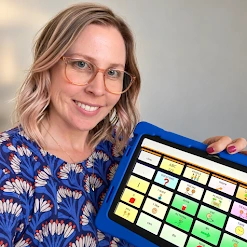
AAC · Augmentative & alternative communication
Communication is more than speech.
AAC supports communication alongside speech or as an alternative to it. It includes gestures and signs, communication boards and books, recorded-message devices, and speech-generating devices or apps. Switches and other access methods can help people use these systems.
Finding the right fit means understanding the person, what they want to say, how they access communication, and where they spend their time.
AAC assessment
Understand the person’s communication strengths, needs and goals, including how they access and use AAC. Explore a range of options with the person and their support network to identify features that suit their everyday life.
Device & system trials
Trial and compare AAC systems in everyday activities to find out what works for the person. Personalise vocabulary and access settings to reflect their interests, relationships and communication needs.
Everyday implementation
Support the person and their communication partners to bring AAC into routines, relationships and the things they enjoy.
Teens & young adults
Moving into adult life.
Leaving school brings new places to communicate: work, study, the community, relationships and running everyday life more independently.
I support teens and young adults through this transition, with goals they choose. Because technology is a big part of my work, we can also look at practical tools that make everyday life easier, such as AAC, phone and tablet features, reminders and other assistive technology, and AI tools where they suit the person.
Support that fits
A starting point,
together.
My clinical work focuses on children, teens and young adults, including neurodivergent folks and complex communicators.
I also take adult referrals where AAC is the focus, such as assessment, device trials, set-up and personalisation.
I work in Newcastle and Lake Macquarie, and telehealth may suit some people. We’ll discuss your location, goals and whether the available service is a suitable fit.
How referrals work
- Email hello@shaerodgers.com with your name and the best way to reach you.
- I’ll send you a secure referral form through my clinical system.
- Then we’ll talk about suitability, delivery options and next steps.
Families, support people and referring professionals can all make a referral.
Email about an AAC referral →Please don’t email reports, diagnoses, NDIS numbers or other clinical details. The secure process is the place for those.
Common questions
A little clarity before you start.
Do I need to know which AAC system I want?
No. A referral can be a starting point for discussing the person’s communication needs and which assessment or trial process may be useful.
How long does an AAC assessment take?
For my assessment service, allow a minimum of three months for assessment and trials, plus additional time for reporting. Most assessments take three to six months, with weekly or fortnightly appointments. The process involves trialling and comparing at least three different AAC systems to inform recommendations.
Can families and professionals both enquire?
Yes. Families, support people and referring professionals can all make a referral. Please obtain any necessary consent before sharing another person’s information.
Does the NDIS fund AAC?
Yes. The NDIS can fund communication devices and other AAC supports when they meet its funding criteria. The funding pathway depends on the device and your plan. I’ll discuss options that fit your plan structure and, with your consent, work with your support coordinator, if you have one, to support the funding request. Funding decisions are made by the NDIA.
Is telehealth available?
We can discuss whether telehealth could suit the person and the type of support needed. Suitability and practical arrangements are discussed individually.
How do I find out about availability and fees?
Ask about current capacity, service arrangements and fees when you make a referral. Availability is confirmed individually.
Your next step
Let’s find a useful place to start.
A question, a new possibility, or a place you’re feeling stuck. Let’s start a conversation.